
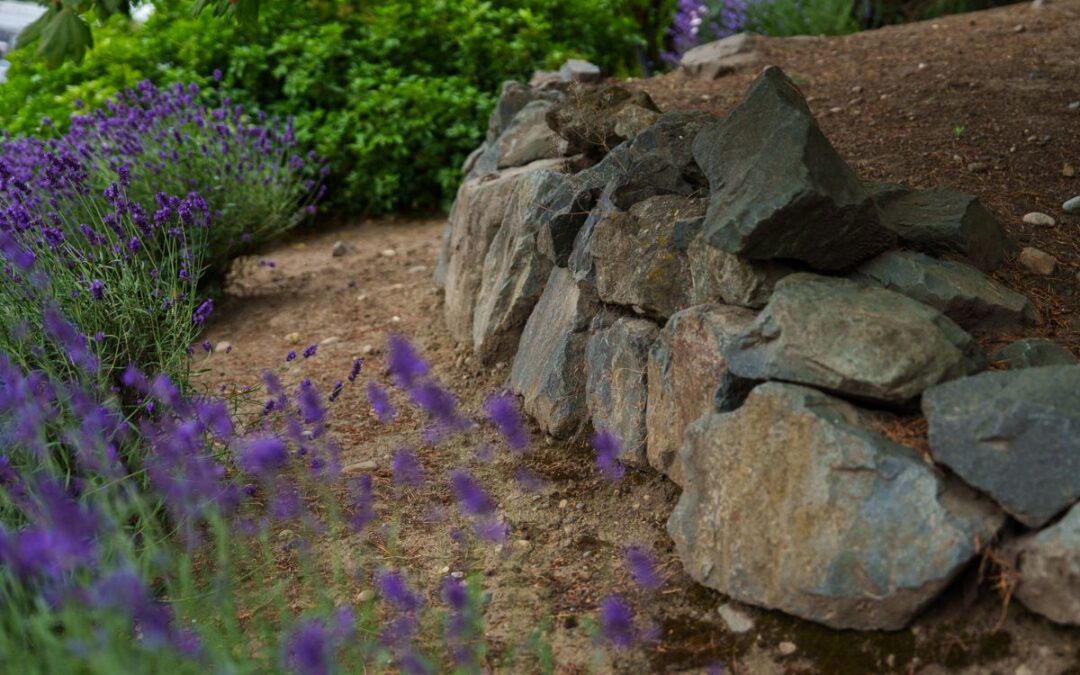
Incorporating rockery into your landscape can add functionality and boost your property’s curb appeal. One of the best things about it is its versatility. Whether you use it to design a Zen garden, a dry riverbed, or a water feature, it adds a beautiful, natural look.
Rock can be used as a border along driveways and structures, as a base for construction projects or installing turf, and – due to its excellent drainage capability – can be added to pipe beds and pathways because it prevents water from pooling.
Rockery is one of the easiest garden additions because it provides year-round interest, even when your plants are dormant. Small rocks – less than ½” – can help suppress weeds and conserve water, which is critical in a climate with changing weather patterns. An alternative gardening style like rock gardening can improve landscapes, minimize resource needs, decrease soil erosion, and create sustainable gardens for the future, making it an eco-friendly option for homeowners.
In this blog, we share three tips for incorporating rockery into your landscape, including selecting and installing it for maximum benefit and beauty, and identifying plants that are popular in rock gardens.
1. Rockery Placement, Style, and Size
Your landscape needs, along with your property’s layout and topography, affect where and how to place rockery—which, in turn, guides some decisions about the style and size of rocks you’ll need.
Consider the rockery’s purpose. Will the stones be used for a rock garden? Are you planning to use large boulders as statements? Or will your rocks serve a functional purpose for a pathway, water feature, or a driveway? (Check your county’s building code before beginning large projects.)
Your answers inform the kinds of rocks you need and where to place them. Here are some tips for guidance:
- Placement Choose a spot where rock naturally fits into the landscape. For example, placing a huge stone smack in the center of your front yard can appear out of place, but it will blend nicely if you place it closer to a building, patio, or a property corner.
- Scale Identify rockery that is in proportion to your surroundings. An oversized boulder next to a small house will dominate the scene, and, conversely, a small rock garden in a sizable yard will get lost, visually.
- Design Think about what you find in nature. You won’t see stones neatly lined up in rows or patterns. Instead, rocks tend to be grouped together, so it’s ideal to follow natural rock placement. In landscaping, groups of 3 rocks of slightly different sizes provide a nice visual appeal. Consider getting the same type of rocks to enhance the picture even more.
- Style and Color Smooth, light-colored stones look more uniform and work well for a Zen garden or a border against a house, while flatter, jagged rocks in muted tones look more in place when used in water features.
- Source and Scope Measure the area you’re planning to fill to determine the amount of rock needed. Lenz Enterprises offers a wide range of rock options to fit your needs – including gravel, cobbles, and boulders – and our experts can guide the style and quantity required for your project.
2. How to Install Rock
Some rockery projects are best left to professionals, where others make a great do-it-yourself (DIY) task. For instance, heavy or oversized boulders will require special equipment and assistance with placement. Retaining walls and pipe beds should ideally be constructed by a professional who can meet local building codes and safety standards.
But there are other rock-focused DIY projects like ground covers, borders, and gardens that you can tackle on your own. If you’re interested in using rockery to build a rock garden, the following tips will get you started:
- Prep the location. When using small- to medium-sized rocks for general landscape appeal, remove enough soil to bury the stones roughly ⅓ of their depth and tilt them slightly backward for the most natural appearance.
- Remove the top layer of turf. Dig out the soil to remove the grass/weeds that live in the top layer of turf. This helps minimize their growth around rocks and keeps them from competing with your plantings.
- Enrich the soil. Work some sand and/or pea gravel into the soil to provide good drainage and a solid base for your plants. Add a layer of rich top soil, like Lenz GardenBlenz Soil, to help your plants thrive.
- Practice safety measures. Stones aren’t always easy to handle and may be heavier than they look. To move them, bend at your knees and lift with your legs: not your back. Larger rocks can be rolled or repeatedly flipped over to get them placed. Use machinery to lift and move heavy or oversized rocks. Importantly, remember the law of gravity. Stability is essential for safety.
3. Selecting Plants for Rock Gardens
When selecting foliage for your rock garden, choose native plants that are compatible with the rocks you’ve chosen, thrive with the amount of sunlight and shade provided, and fall within your location’s USDA Hardiness Zone.
Plants that are native to the conditions here in Western Washington will establish themselves in 1-3 years, after which they typically need less water and fertilizer than non-native varieties. Native options also provide essential food and habitats for our local pollinators and wildlife. Here are some tips for choosing the right plants for your rock garden.
- Stay low Low-growing plants that are 12” or less provide a good visual balance. Taller plants will dwarf rocks and look out of place against the shorter stones.
- Choose your colors Consider adding plant varieties that contrast against the muted stone colors to make the design pop.
- Fill in the gaps Moss and succulents soften hard edges, provide a carpet around the rocks, and are a great way to fill spaces between stones and larger plant groupings.
- Consider maintenance needs Stones drain water very well, which means rock gardens don’t hold much moisture. Choose drought-tolerant plants whenever possible. If your plant selections depend on more moisture, you’ll need to water accordingly.
- Mark the seasons Your plant selection should take into account the length of the growing season so you can enjoy the beauty of your rock garden for as long as possible.
Boring to Beautiful
With endless design opportunities that can transform the look of any sized yard, rockery can improve the aesthetics and function of your landscape. Whether you’re designing your landscape from scratch or improving existing features, you’ll find the landscape aggregates you need right here at Lenz Enterprises. Come by our yard and talk with our team today!
Thanks for Reading!
If you found this article helpful, get to know us by following Lenz Enterprises on Facebook and Instagram. We regularly provide education about soil, compost, and Earth materials, gardening advice and plenty of humor too! If you’re located in western Washington and need crushed rock, pea gravel, chips, cobbles, and boulders, give us a call at 360-629-2933—we’re here to help!