

Mulch is one of the most important materials you can add to a Pacific Northwest landscape. It helps soil retain moisture, protects against temperature swings, reduces weed growth, and gradually improves soil health over time.
If you garden or maintain a yard in Western Washington, mulch really isn’t optional. It’s a cost-effective, science-backed tool for keeping soil healthy, uniformly moist, and protected through variable, extreme weather conditions year-round. This is especially important during the weeks-long dry stretches that can define our summers.
Here’s exactly what mulch does and why choosing the right type for your landscape matters.
What Does Mulch Do for Soil Moisture?
Mulch acts as a barrier between your soil and the elements, helping reduce evaporation caused by sun exposure and wind, even on cool days.
When you cover the ground with a layer of mulch, you block direct sunlight and reduce air movement directly at the surface. This can dramatically slow down moisture loss between rain events or watering.
Like a lid slowing evaporation from a pot of water, mulch helps soil stay consistently moist between rainstorms and waterings. The result is soil that stays consistently moist longer after waterings or rain showers, with less frequent intervention needed from you.
How Does Mulch Protect Soil from Rain?
Mulch doesn’t just help soil retain moisture; it also protects soil structure during heavy rain.
Rain feels gentle, but repeated rainfall can break apart bare soil and create surface crusting. When fine soil particles get compacted together into a hard crust, two things happen. First, water runs off rather than soaking into the soil, where it can reach your plants’ roots. Second, the resulting puddles and runoff carry topsoil (and nutrients) away with them.
A layer of mulch absorbs the kinetic energy of rain before it reaches the soil, protecting the surface structure below. Water can still make its way through the ground as mulch improves infiltration and helps reduce the surface disruption that can lead to crusting and runoff.
Does Much Help Regulate Soil Temperature?
Mulch can reduce daily soil temperature swings from more than 20 degrees Fahrenheit in bare soil to as little as 5–9 degrees Fahrenheit. That insulation can make a major difference for plant roots during both summer heat and winter cold.
During the dry summer months, unmulched soil, especially in raised beds or flower borders, can heat up significantly. These high temperatures can inhibit root function while also accelerating moisture loss, compounding plant stress. In cold periods, that regulation works in reverse. Mulched soil stays warmer in winter because the same insulating properties that block heat during the summer also slow heat from escaping the soil when temperatures drop.
A 3-4-inch layer of mulch interrupts temperature spikes and dips at the surface before they can affect your plants.
What Happens to Mulch Over Time?
As mulch breaks down, it doesn’t just disappear; it becomes part of the soil. This is where organic mulch can continue benefiting your garden and flower beds long after application.
Decomposing organic material increases the soil’s organic matter content, which feeds the microbial activity that drives nutrient cycling and long-term soil health.
Mulch can be thought of as a system you set in motion instead of a product you simply apply. The mulch you lay in spring helps control moisture and temperature through the summer, and by fall and winter, it’s beginning to feed the soil underneath. Applied consistently year after year, mulching can build better soil over time. This can mean better root systems, more resilient plants, and less maintenance for you.
Which Mulch Is Best for Your Landscape Project?
Lenz carries several mulch options, and each carries different benefits depending on where and how you’re using them.
Lenz Mulch is a specialty blend of fine red bark and premium Lenz Compost, processed through a ½” screen. Because it already contains compost, it begins improving soil biology immediately and continues enriching the soil as it breaks down. That makes it the most beneficial option for garden beds, vegetable gardens, and anywhere soil health is the goal. It’s also excellent as a top dressing or soil amendment worked into beds between seasons.
Eco Mulch is made from recycled organic materials, including wood chips, bark, and plant matter. It’s a versatile, environmentally responsible ground cover that performs well for moisture retention, weed suppression, and erosion control across garden beds and landscapes.
Fine Bark is smooth-textured, finely screened fir and hemlock bark that provides a clean, finished look. It’s effective as a weed barrier and works well in ornamental beds where appearance is just as important as function.
Medium Bark is coarser than fine bark, with particle sizes ranging from fines up to about 4 inches. The coarser texture makes it particularly durable for larger landscape areas and effective as a long-lasting weed barrier.
Black Bark Mulch is fine-screened aged fir and hemlock that delivers a rich, dark look. If you want a strong contrast against light-colored stone borders or vibrant plantings, black bark creates a polished appearance while still handling moisture and weed control.
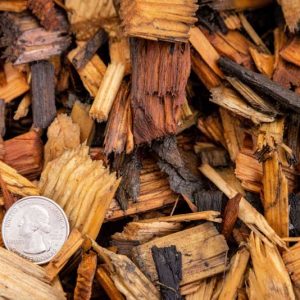
Woodchip Mulch is larger, all-natural, and aromatic. It’s best suited for decorative areas, open landscaping, and pathways where you want a natural look.
Cedar Chips are commonly used under swing sets and in dog kennels (cedar is a natural bug deterrent), as well as in landscape areas where that aromatic quality is a plus. Note: Lenz cedar chips are not certified engineered play chips. Check your local WAC codes if you’re installing in a regulated play area.
How Deep Should Mulch Be Applied?
For most garden beds, 3-4 inches is effective. Anything less than 2 inches usually won’t provide meaningful weed suppression or moisture retention. However, more isn’t always better. Mulch applied in a layer greater than 4-5 inches can restrict airflow to the soil surface and potentially create a habitat for some pests.
One rule of thumb across mulch types is to keep it pulled back 2-3 inches from plant stems and tree trunks. Mulch held directly against woody tissue traps moisture against the bark and can cause rot over time.
Get the Right Mulch for Your Landscape
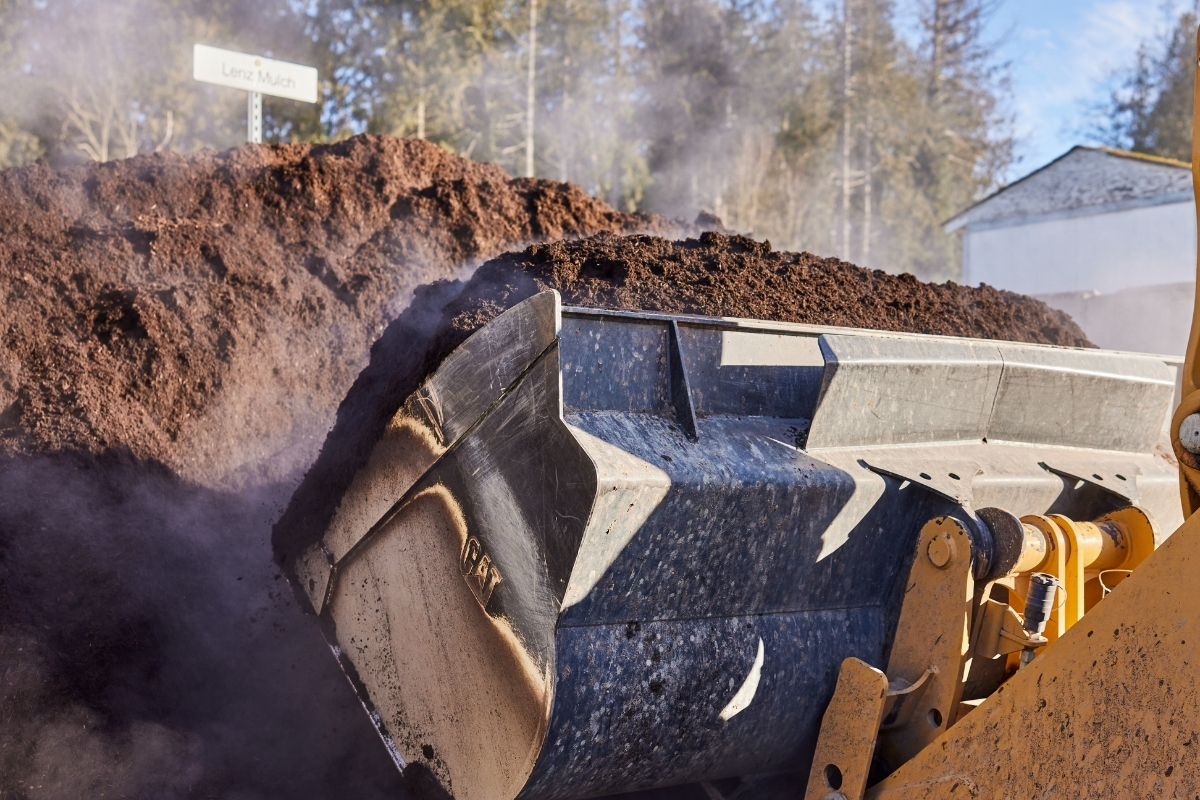
Lenz Enterprises carries all of the above mulches in bulk or bags, available for pickup in Stanwood or delivery directly to your home or job site. Not sure how much you need? Use our free online Materials Calculator to get a cubic yardage estimate based on your area and target depth.