
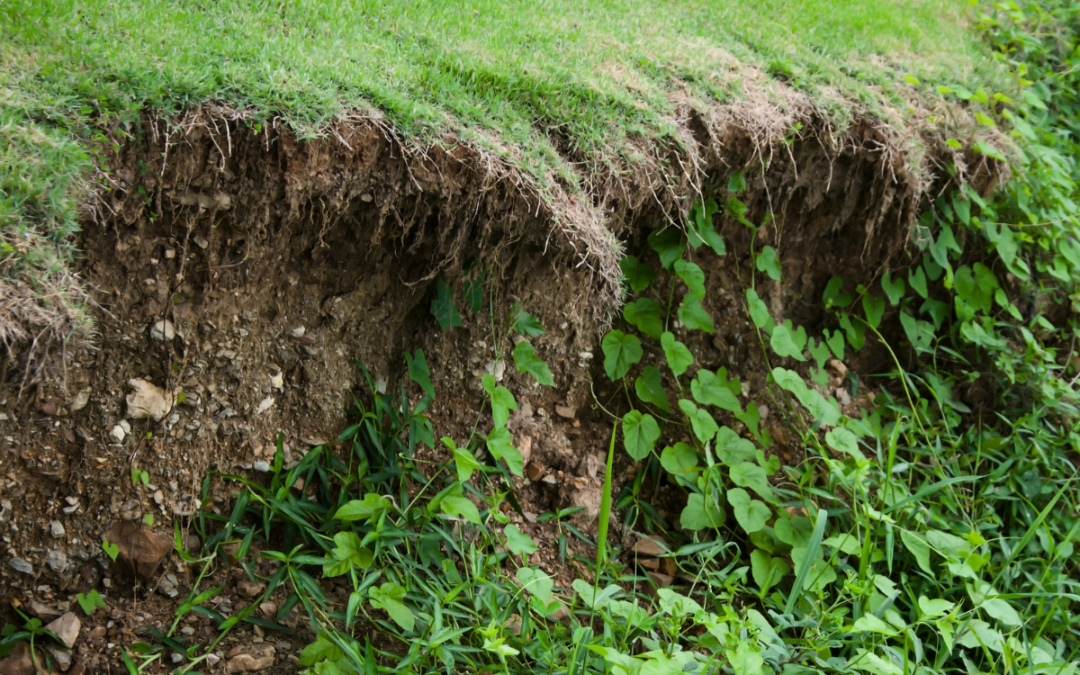
October is one of the best times to prevent soil erosion prevention in Western Washington. Once the November rains begin, saturated ground makes it difficult to install drainage, place rockery, spread mulch, or establish new plants. Addressing erosion now protects your landscape through the winter and helps you avoid larger repairs in the spring.
Why Does Soil Erosion Happen?
Erosion happens when water or wind dislodge soil particles and carry them away. In the PNW, rain is usually the primary culprit. When rain hits bare soil, the impact breaks apart the surface. As water runs downhill, it picks up loose soil particles and washes them farther down the slope .
Our region’s geology makes it particularly susceptible to erosion. Much of the Puget Sound lowland sits on glacial soils made up of fine silt and clay. These small particles are easily loosened by rain and taken away by runoff.
Two other factors can also contribute to how quickly erosion happens on your property – compaction and the amount of exposed soil. Bare soil is easily swept away when there are no plant roots to hold it in place, while compacted soil sheds water instead of absorbing it, which creates runoff. Keeping soil protected and improving its structure are two of the simplest ways to prevent erosion.
How Do You Prevent Erosion on Slopes and Hillsides?
Slopes make water move faster downhill, which is why they erode more quickly than flat ground. Even a gentle slope can significantly increase erosion, and the effect becomes more pronounced as the grade steepens. A small bare patch can gradually expand into a larger eroded area, exposing roots and washing away valuable topsoil.
For mild erosion on gentle slopes or around planting beds, decorative gravel or cobbles can help protect exposed soil from splash erosion while still allowing water to soak into the ground. For longer-term protection, pair them with hardy native plants. As the plants’ roots grow, they’ll help stabilize the soil.
Where runoff has already carved channels or the slope is steeper, structural rock such as rockery stone or native boulders provides a more durable solution. These materials interrupt the path of runoff, slow moving water, and protect vulnerable areas from further erosion. Install the structural rock first, then establish plants around and between it. The rock provides immediate stability while the plants’ root systems gradually reinforce the slope.
Once erosion is controlled, mulch can help protect newly planted areas while roots develop and vegetation fills in.
Can Mulch Help Prevent Soil Erosion?
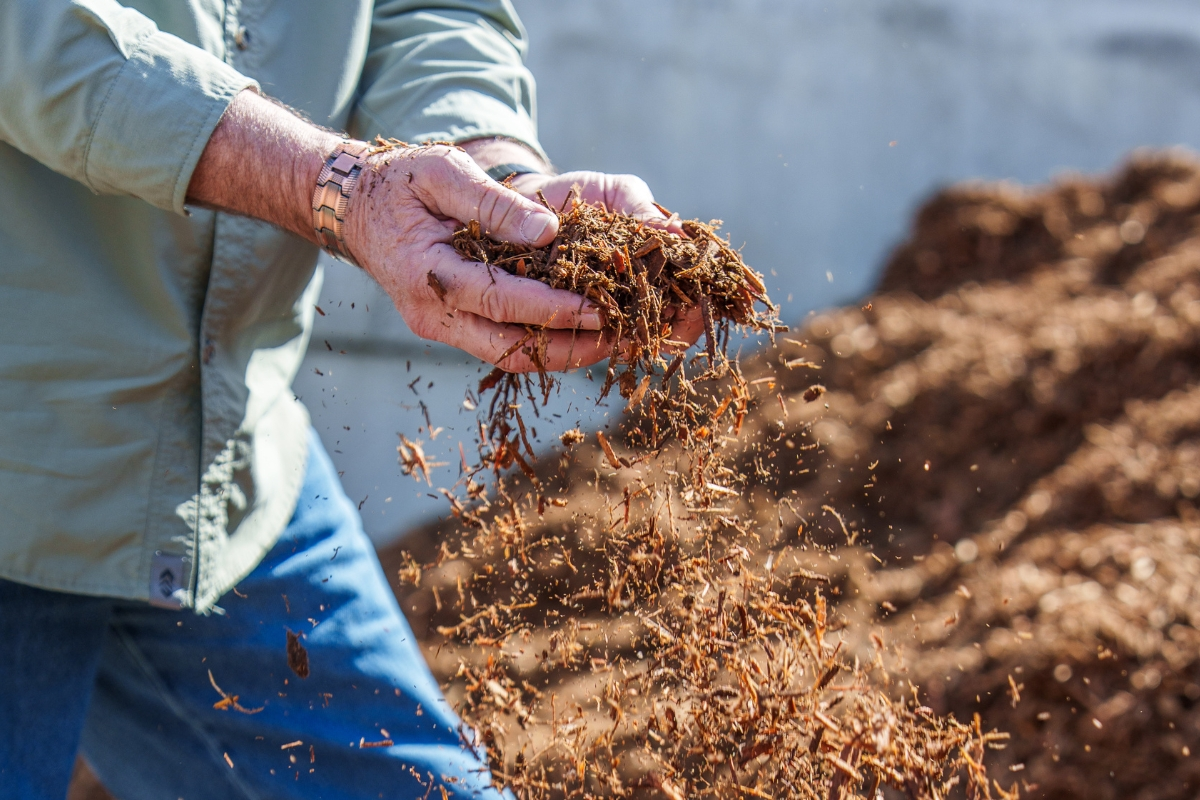
Mulch acts like a protective blanket over bare soil. Instead of raindrops striking the ground directly and breaking soil particles apart, the mulch absorbs much of that impact. It also slows surface runoff, giving water more time to soak into the soil rather than carrying sediment downhill. By reducing erosion and helping retain moisture, mulch creates a more stable environment for new plants to establish.
Coarse materials like Woodchip Mulch and Eco Mulch absorb more of the impact and stay in place better than finer mulches, which can wash away or compact during heavy rain. Apply 4 to 6 inches around plants on sloped areas (deeper than if you were mulching a garden bed), as some material will naturally migrate downhill over the season.
Plant roots provide long-term stability by holding soil in place, while mulch protects the soil surface from erosion.
What Drainage Improvements Can Help Control Erosion?
Sometimes erosion is a symptom of a larger drainage problem. If water repeatedly follows the same path across your property, replacing lost soil or adding surface protection won’t address the source of the issue. In these cases, controlling the water flow is the first step.
A French drain is a common solution for areas where water pools or needs to be redirected below the surface. It uses a perforated pipe surrounded by washed drain rock in a sloped trench to capture and redirect water before it reaches the surface.The trench is filled with clean, washed drain rock, such as 7/8″ or 1-1/2″ Washed Drain Rock. Unlike gravel with fines, it allows water to move freely through the system.
For concentrated surface runoff that follows a visible path across the yard during heavy rain, a dry riverbed using 2″–4″ cobbles creates a controlled channel for runoff, reducing its speed while encouraging water to soak into the surrounding soil.
Before digging any trench, call 811 to have underground utilities located. It’s free and required by Washington law.
Which Aggregate Should You Choose?
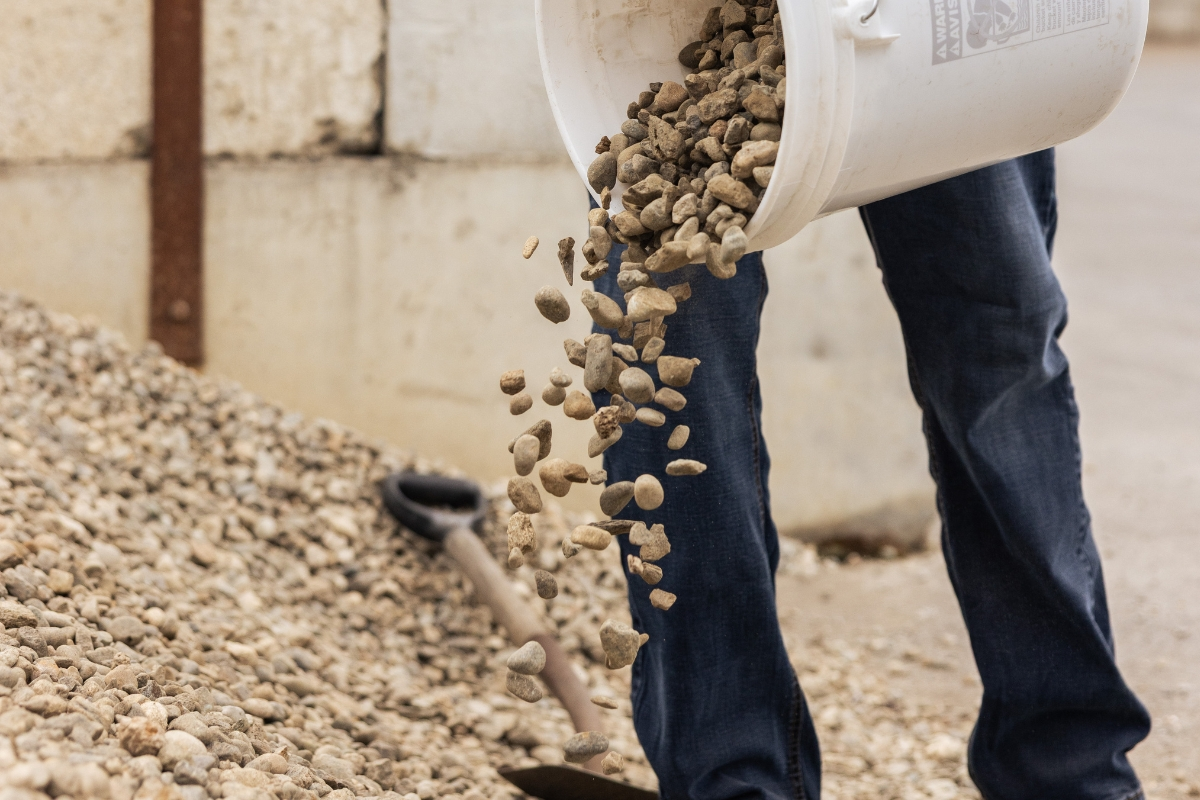
The right material depends on where the water is moving and what you need the surface to do.
- Washed Drain Rock – Keeps water moving freely through French drains and drainage trenches.
- 2–4″ Cobbles – Create surface drainage channels from washing out while slowing runoff.
- Rockery Stone – Provides structural support for steep slopes and areas with active erosion.
- Native Boulders – Add natural-looking stabilization to slopes, drainage features, and landscape areas while helping slow and redirect runoff.
- 5/8″ Minus – Creates a compacted, erosion-resistant surface for driveways and pathways.
- Decorative Gravel – Reduces splash erosion around foundations and landscape beds while improving drainage.
Get Ahead of Erosion Before the Rains Return
Erosion is much easier and less expensive to prevent than it is to repair. Small erosion problems are often a straightforward fix with mulch, drainage improvements, plants, or the right aggregate.
Whether you’re installing a French drain, stabilizing a hillside with rockery, refreshing mulch, or choosing the right aggregate for your project, fall is the best time to get the work done.
Find erosion-control materials including drainage rock, cobbles, rockery rock, and mulch at our Stanwood yard, available in bulk or bags with delivery across Northwest Washington.
If you’re not sure which materials your project calls for, our team is happy to help. Give us a call at (360) 629-2933 or stop by the yard.