
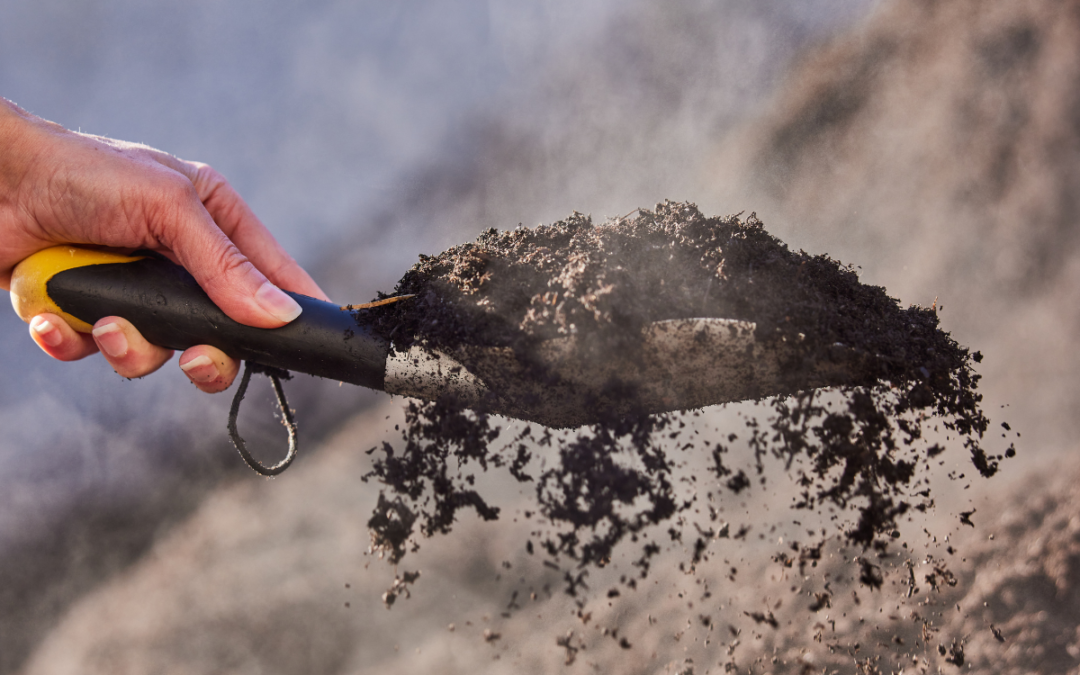
STA Certified Compost is compost that undergoes regular testing through the U.S. Composting Council’s (USCC) Seal of Testing Assurance (STA) program. For gardeners, landscapers, and contractors, this means more reliable information about the compost they’re purchasing.
Compost can improve soil structure, support plant growth, and help balance moisture retention. How well it does those things depends in part on the materials used and how they’re processed. STA certification helps buyers evaluate the finished product, whether they’re preparing a vegetable garden or restoring soil health.
What is STA Certified Compost?
The Seal of Testing Assurance (STA) program was established by the U.S. Composting Council to create consistent testing and reporting standards for commercially produced compost.
Participating manufacturers must regularly test their finished compost through approved laboratories and follow standardized testing methods.
How is STA Certified Compost tested?
Independent laboratories approved by the U.S. Composting Council (USCC) regularly test STA Certified Compost. These laboratories use standardized methods called TMECC (Test Methods for the Examination of Composting and Compost), which provide detailed instructions for how the manufacturer should collect samples, how the laboratory should conduct tests, and how results are reported.
These standardized methods cover everything from nutrient levels to how compost affects plant growth. For example, one TMECC method measures compost maturity by observing how well seeds germinate and seedlings grow when exposed to the compost.
By following the same procedures, laboratories can produce results that manufacturers and customers can compare. Customers can request a Compost Technical Data Sheet (CTDS) from an STA-participating manufacturer to review detailed test results before choosing compost for their project.
Testing evaluates:
- Nutrient content: Measures nutrients such as nitrogen, phosphorus, and potassium that contribute to plant growth.
- pH levels: Determines how acidic or alkaline the compost is, which can affect soil conditions.
- Maturity and stability: Evaluates how thoroughly the organic materials have decomposed and whether the compost is ready for use.
- Organic matter: Measures the amount of carbon-based material in the compost, which contributes to soil structure, moisture retention, and nutrient availability.
- Soluble salts: Measures salt concentrations that can affect plant growth, particularly in salt-sensitive plants.
- Pathogens and trace metals: Checks whether the compost meets applicable safety limits.
Testing and frequency depend on how much finished compost a manufacturer produces. Under standard STA requirements, facilities test their products every one to three months, with larger operations testing more frequently.
Why does STA certification matter for gardeners and landscapers?
Poor-quality compost can cause problems even when it looks and smells perfectly fine. Compost that hasn’t matured properly may interfere with seed germination, while excessive salt levels can damage sensitive plants. Contaminants such as heavy metals can also pose concerns, particularly when compost is used in vegetable gardens.
For home gardeners, STA certification provides added peace of mind that the compost has been tested for these potential issues before it’s added to planting areas. This is especially helpful when using compost to provide natural nutrition for healthy flowers and productive vegetable gardens.
For professional landscapers, STA certification helps reduce uncertainty when purchasing large quantities of compost. Contractors can review independent laboratory results, verify that products meet project specifications, and make more informed decisions before investing in bulk materials.
How does quality compost support a healthier ecosystem?
In Western Washington, heavy seasonal rainfall can wash soil and sediment into nearby streams and waterways. Adding compost to disturbed or compacted soils can improve water infiltration, slow surface runoff, and support the vegetation needed to stabilize the ground. These benefits create a healthier ecosystem, making compost a useful material for public works, restoration, and environmental improvement projects throughout Washington State.
For larger environmental projects, compost may be used in applications such as:
- Erosion control: Supporting soil stabilization and vegetation establishment on disturbed land.
- Stormwater management: Improving infiltration in properly designed rain gardens and bioswales.
- Habitat restoration: Rebuilding soil organic matter to support native plant establishment.
- Revegetation projects: Improving growing conditions in areas affected by construction or soil disturbance.
How does Lenz Enterprises produce quality compost?
At Lenz Enterprises, compost quality starts with the production process.
Lenz Compost is made using a state-of-the-art aerated static pile (ASP) system, which allows precise control over airflow and temperature as organic materials break down.
During composting, microorganisms generate heat as they decompose organic matter. Maintaining appropriate temperatures and oxygen levels is critical for eliminating pathogens and weed seeds while allowing the material to stabilize.
The ASP system gives Lenz greater control over these conditions throughout the composting process. This helps Lenz Fine Compost and OMRI-listed Lenz Organic Compost meet applicable regulatory criteria and maintain consistent quality.
Lenz Enterprises also has a longstanding relationship with the U.S. Composting Council and supports the industry’s commitment to compost testing, transparency, and responsible production practices.
Find quality compost at Lenz Enterprises
Whether you’re improving a backyard garden or sourcing materials for a commercial landscaping project, knowing what’s in your compost is an important part of getting the results you want.
Lenz Enterprises offers STA Certified Lenz Fine Compost and STA Certified, OMRI-listed Lenz Organic Compost. Both are produced using a controlled composting process designed to support quality and consistency.
Visit our Stanwood yard, call for delivery, or contact our team at (360) 629-2933 to learn more about our compost products, availability, and options for your next project.
Frequently asked questions about STA Certified Compost
Is STA Certified Compost better than regular compost?
STA certification provides additional assurance through standardized testing, regular monitoring, and transparent product information. It doesn’t guarantee that one compost is better for every application, but it helps buyers evaluate quality and choose an appropriate product.
Is STA Certified Compost safe for vegetable gardens?
STA Certified Compost must meet specified pathogen and trace metal limits. However, gardeners should still review the product’s technical data sheet and recommended uses to determine whether it’s appropriate for their vegetable garden.
Is STA Certified Compost the same as organic compost?
No. STA certification focuses on compost testing and reporting, while OMRI listing identifies products reviewed for use in organic production. Lenz Enterprises offers OMRI-listed Lenz Organic Compost for customers looking for a compost suitable for organic growing practices.
Does Washington State require STA Certified Compost?
Requirements depend on the project and the agency overseeing it. Some public works, transportation, and environmental projects specify STA Certified Compost or particular compost testing standards. Whether you’re purchasing compost for a public project or your own backyard, reviewing the product’s testing information is a good way to make sure it meets your needs.